A Baltimore man took to national television last week to bring attention to the missing-persons case for his stepdaughter, who was eight months pregnant when she disappeared in 2017.
Paula Hill says police didn't search for her daughter, Shemika, when she went missing because law enforcement believed she ran away - a common complaint from families of missing black Americans.
Phoenix Coldon, 23, was last seen on Dec. 18, 2011, sitting in the driveway of her family's St. Louis County home. Her mother, one of the last people to see her, thought Coldon had gone to the store.
Founded in 2008 by Tina Frundt, Courtney's House is a non-residential "drop-in" center that provides long-term therapy, counseling and other services for those traumatized by sex trafficking.
When Jayme Closs went missing from her Barron, Wisconsin, home on October 15, 2018, local law enforcement gathered more than 80 surveillance videos from businesses, citizens, and highways to investigate the murder of her parents and locate the lost teen.
What started 10 years ago as a passion project between two sisters-in-law to bring attention to the growing number of missing persons of color, has evolved into one of the nation’s top minority-run organizations, reuniting families and providing much needed closure for others.
The Black and Missing Foundation is coordinating a drive to gather needed items for those affected by Hurricane Harvey and to bring some relief to families.
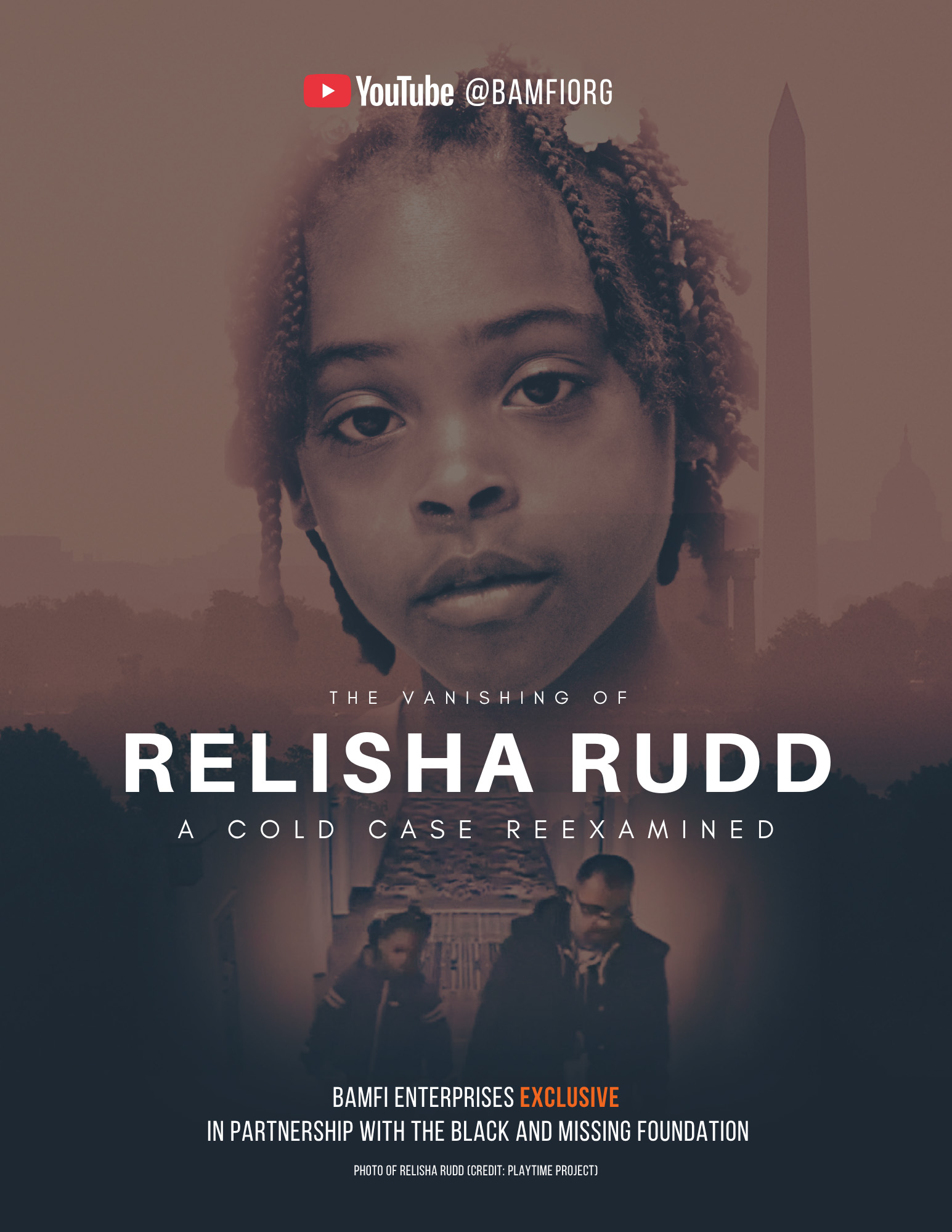
Our docuseries, The Vanishing of Relisha Rudd: A Cold Case Reexamined, has been named a 2026 finalist in the Content & Media category! Help us amplify the stories that matter and vote for us by October 29!
How to Vote: Once on the voting page, scroll down or use the search function to find “Relisha”, then select The Vanishing of Relisha Rudd: A Cold Case Reexamined to cast your vote.